See It Before You Commit: How Digital Smile Technology Is Changing the Way We Plan Treatments
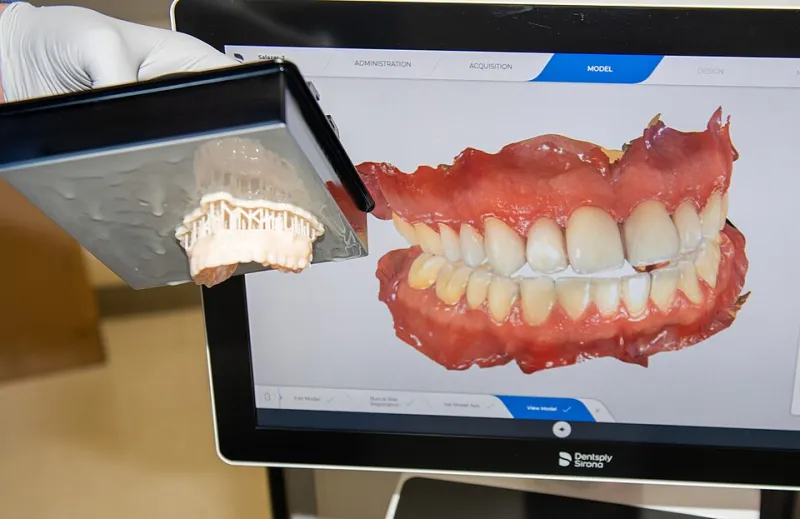
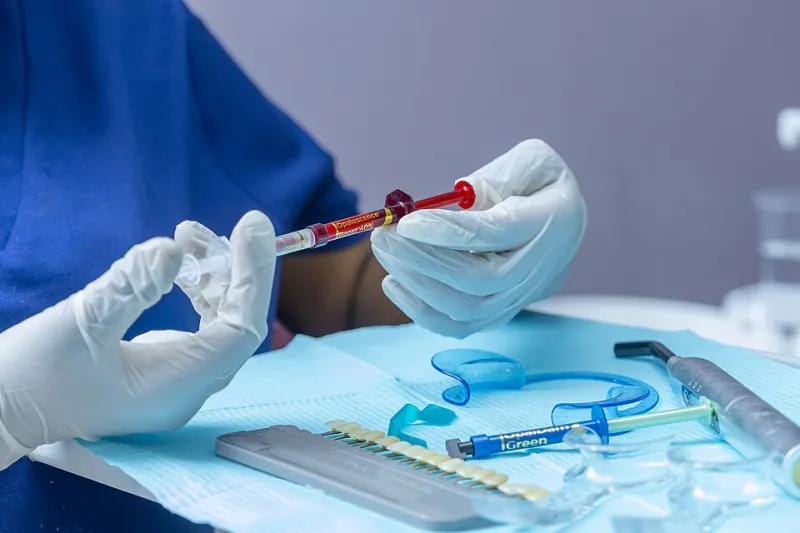
Photo: U.S. Air Force photo by Airman 1st Class David S. Calcote, Public domain, via Wikimedia Commons
There's a particular kind of anxiety that comes with any major aesthetic change. Whether it's a new haircut, a bold home renovation, or a cosmetic treatment, the fear of the unknown — what if I hate it? — is real. And for a long time, cosmetic dental care required a significant leap of faith. You'd describe what you wanted, your provider would use their expertise to interpret it, and somewhere between the two, you'd hope for the best.
That dynamic has shifted dramatically. Digital smile design and AI-assisted imaging tools are rewriting the consultation experience, giving patients a preview of potential results long before any treatment begins. It's one of the more exciting developments in aesthetic dental care, and it's worth understanding what these tools actually do — and what they don't.
What Is Digital Smile Design, Exactly?
Digital Smile Design (DSD) is a treatment planning framework that uses digital photography, video, and design software to map out proposed changes to a patient's smile. The process typically starts with high-resolution photos and sometimes short video clips of your face, teeth, and smile in motion.
From there, a provider or dental technician uses specialized software to overlay proposed changes — adjusting tooth shape, length, color, symmetry, and proportion — onto your actual images. The result is a visual mockup of what your smile could look like after treatment.
It sounds simple, but the implications are significant. Instead of describing your goals in the abstract, you're reacting to something visual. That shift changes the entire quality of the conversation.
Where AI Comes Into the Picture
Artificial intelligence has accelerated what's possible in smile simulation. Machine learning algorithms can now analyze facial geometry, lip line, and tooth proportions to generate smile previews that are more precise and more personalized than earlier software allowed.
Some platforms use AI to automatically detect facial landmarks — the corners of the mouth, the midline of the face, the curve of the gum line — and use those reference points to calibrate proposed changes. This reduces guesswork and helps ensure that the simulated result is actually achievable given the patient's anatomy.
A few systems have even incorporated augmented reality, allowing patients to see a simulated smile overlaid in real time via a tablet or phone camera. Think of it as a try-before-you-buy experience, except what you're trying on is a version of your own face.
Virtual Try-Ons: More Than Just a Gimmick
Virtual smile try-ons have gotten a bit of a mixed reputation — partly because early versions were obviously unrealistic, more digital art project than clinical tool. But the technology has matured considerably.
Today's better-quality simulations account for the three-dimensional nature of teeth, the way light reflects off enamel, and how a smile looks in movement rather than just in a static photo. When done well, a virtual try-on gives a genuinely useful sense of proportion and change, even if it can't replicate every nuance of the final result.
For patients who are on the fence about committing to something like veneers or a full smile makeover, seeing a realistic simulation can be the deciding factor — in either direction. Sometimes people see the mockup and realize they want a more subtle change than they originally thought. Other times, it confirms that they're ready to move forward.
Either outcome is valuable.
The Role of Intraoral Scanners and 3D Imaging
Digital smile planning doesn't stop at photos. Intraoral scanners — handheld devices that capture detailed 3D models of the teeth and gums — have replaced traditional dental impressions (the goopy molds most people remember with mild horror) in many modern practices.
These scans feed into software that can model proposed restorations with a high degree of accuracy. If you're planning veneers, for example, a digital model can show exactly how much enamel would need to be adjusted and how the final shells would sit on your existing teeth.
Cone beam CT imaging takes it further still, producing full three-dimensional X-rays that show teeth, roots, bone structure, and sinuses in a single scan. This level of detail is particularly useful for planning implants or more complex restorative work, but it also contributes to a more comprehensive picture of a patient's overall oral landscape.
Why This Matters Psychologically
There's a reason the consultation experience has historically been one of the more stressful parts of cosmetic dental care. Patients often struggle to articulate what they want, providers interpret requests through their own clinical lens, and the gap between expectation and outcome can lead to disappointment — even when the technical work is excellent.
Digital tools close that gap by making the conversation visual. Research in patient communication consistently shows that people retain and process information more effectively when it's paired with imagery. Seeing a simulated outcome doesn't just help patients decide — it helps them communicate more precisely what they do and don't like, which in turn helps providers calibrate their approach.
There's also something psychologically reassuring about the process itself. When a patient can see that their provider is working from a detailed, personalized plan rather than a general template, trust naturally increases. The consultation stops feeling like a sales pitch and starts feeling like a collaboration.
What These Tools Can and Can't Promise
It's worth being clear-eyed here: digital simulations are planning tools, not guarantees. Biological variables — gum health, bone structure, how a tooth responds to treatment — can't always be predicted with perfect accuracy. A simulation reflects what's possible given ideal conditions; the actual outcome depends on a range of clinical factors.
A good provider will be transparent about this distinction. The goal of digital smile design isn't to make promises — it's to align expectations, improve communication, and build a treatment plan that's grounded in both the patient's vision and clinical reality.
When used responsibly, these tools are genuinely powerful. When oversold as a preview of guaranteed results, they can set patients up for disappointment.
The Bigger Shift: From Passive Patient to Active Participant
Maybe the most meaningful thing digital smile technology has changed isn't the tools themselves — it's the dynamic between patient and provider. For most of dental history, patients showed up, deferred to the expert, and hoped for the best. The consultation was largely one-directional.
Now, patients can engage with their own treatment plan visually, ask specific questions, and make genuinely informed decisions before a single appointment begins. That shift toward active participation isn't just more satisfying — it tends to produce better outcomes, because patients who understand their treatment are more likely to follow through with care and maintenance.
At Smile Bar Studio, we think that's exactly how it should work. Your smile is personal. The process of designing it should be too.